9 nights
From
€3,569
pp

Author: Chris Hawkins, Programme Director
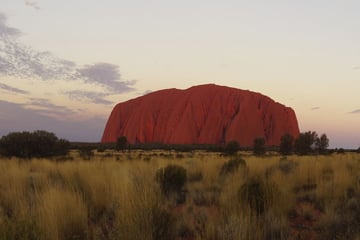
Ask anyone to picture Australia and you'll get the Sydney Harbour Bridge, the Opera House sails – and then, almost always, a third image: a vast red monolith rising out of the desert under a burning sunset sky. That's Uluru, known to earlier generations of travellers as Ayers Rock, and in my years of sending people to Australia, it's the one destination I've never had a client come back disappointed by.

Uluru is a sandstone formation standing 348 metres (1,142 feet) high, with a circumference of 9.4km (5.8 miles) – and the truly remarkable part is that most of its bulk lies underground, which is part of why photographs never quite capture its scale. On 26 October 1985, the Australian government formally returned ownership of Uluru to its traditional owners, the Anangu people (the Pitjantjatjara and Yankunytjatjara), who lease it back to Parks Australia under a 99-year agreement. It's a UNESCO World Heritage Site, recognised for both its natural and cultural significance.
One thing I always clear up for clients: Uluru is not at Alice Springs. It sits considerably further into the remoteness of Central Australia, roughly 450km southwest – around a five-to-six hour drive, or a short flight direct to Ayers Rock Airport (Connellan), which is what most of our clients choose given the distance. However, once you arrive, nothing quite prepares you for that first sighting: the rock simply appears out of an otherwise empty horizon, with nothing else around it for scale.
I still see guides claiming there's only one hotel near Uluru. That hasn't been true for years. All accommodation sits within Ayers Rock Resort in the town of Yulara, but you've genuinely got a spread of choices depending on your budget and style:
You can browse our full range of Uluru accommodation and we'll help match the right one to your trip.
Once you've settled in and your body's adjusted to that dry desert heat (it catches most first-timers off guard), the whole of the Red Centre opens up to you: scenic flights, 4WD tours, dining under the stars, and bush tucker experiences with Aboriginal guides. An important note: climbing Uluru was permanently closed in October 2019, out of respect for the wishes of the Anangu traditional owners, for whom the rock holds deep spiritual significance. I'd always steer clients towards the alternatives below instead – honestly, they're better experiences anyway.

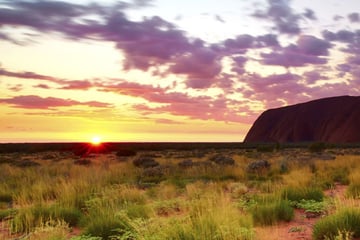
If there's a single non-negotiable on any Uluru trip, it's watching the desert wake up as the sun rises over the rock. The reds intensify in a way that genuinely doesn't translate to photos, no matter how good your camera is.
If you'd rather do this independently, several viewing platforms are landscaped into the dunes, offering panoramic views of both Uluru and Kata Tjuta (the Olgas). A newer platform sits around 3km from Uluru with traditional shade shelters and roughly 1,600 metres of walking track – a good option if you want a bit of solitude away from the main viewing area.

For a fuller experience, I'd point people towards a guided sunrise tour, like our Red Centre Sights & Sounds tour, which starts with a traditional Australian breakfast before you watch Uluru and Kata Tjuta light up together. You'll spend the rest of the day driving the base, stopping at waterholes and viewing Aboriginal rock art with a guide who can actually explain its significance – something I'd always recommend over exploring alone if this is your first visit.
Once you've earned your early start, it's worth building out the rest of the day. Kata Tjuta rewards a walk through its towering red domes with some of the best views in the park. If the desert heat becomes too much, a helicopter flight gives you a completely different perspective on the rock's scale. There's also a genuinely good range of free activities on offer at Ayers Rock Resort – garden walks, markets, cultural dance performances, and the chance to try spear and boomerang throwing.
Many of our clients combine Uluru with Kings Canyon and Alice Springs via our Kings Canyon and Uluru tour, or extend the Red Centre into a full rail adventure with our Uluru & The Ghan itinerary. For a broader look at the region, our guide to exploring Australia's Red Centre is a good place to start.
However you choose to experience it, Uluru is one of those genuinely once-in-a-lifetime destinations. The scale, the colour, the way it shifts through the day – it's something that stays with you long after you've brushed the red desert sand out of your shoes. Call our specialists on 01 664 9920, browse our current Australia deals, or request your free Australia travel guide to start planning.
Can you still climb Uluru?
No. Climbing Uluru was permanently closed on 26 October 2019, out of respect for the Anangu traditional owners, who consider the rock a sacred site. The base walk – around 9.4km, following the rock's circumference – is the recommended way to experience it up close instead, and we'd suggest it over trying to summit it in any case.
Is Uluru near Alice Springs?
No, and this catches a lot of first-time visitors out. Uluru sits roughly 450km southwest of Alice Springs, around a five-to-six hour drive. Most of our clients fly direct to Ayers Rock Airport (Connellan) rather than driving the full distance.
Where should I stay near Uluru?
All accommodation is within Ayers Rock Resort in Yulara, but there's more choice than people expect – from the comfortable, well-located Desert Gardens Hotel, to the more indulgent Sails in the Desert, up to the ultra-luxury Longitude 131 for an unforgettable special-occasion stay.
What's the best time of day to visit Uluru?
Sunrise, without question. The colour change across the rock as the sun comes up is the single experience I'd never let a client skip, whether from one of the viewing platforms or as part of a guided tour that includes breakfast and a base walk.
Is Uluru worth visiting if it's "just a rock"?
We hear this a lot before people go, and never once after. Uluru's scale, its deep cultural significance to the Anangu people, and the way its colours shift through the day make it one of the most genuinely moving natural sights we send clients to anywhere in the world.


Sign up to our newsletter
Be the first to know about our exclusive offers and holiday inspiration by email.